How to choose a business name (with checklist)
A practical framework for naming a business well: the four criteria that matter, how to generate 50 candidates, how to filter in four cuts, and an 8-point checklist for scoring finalists.
Last updated April 29, 2026
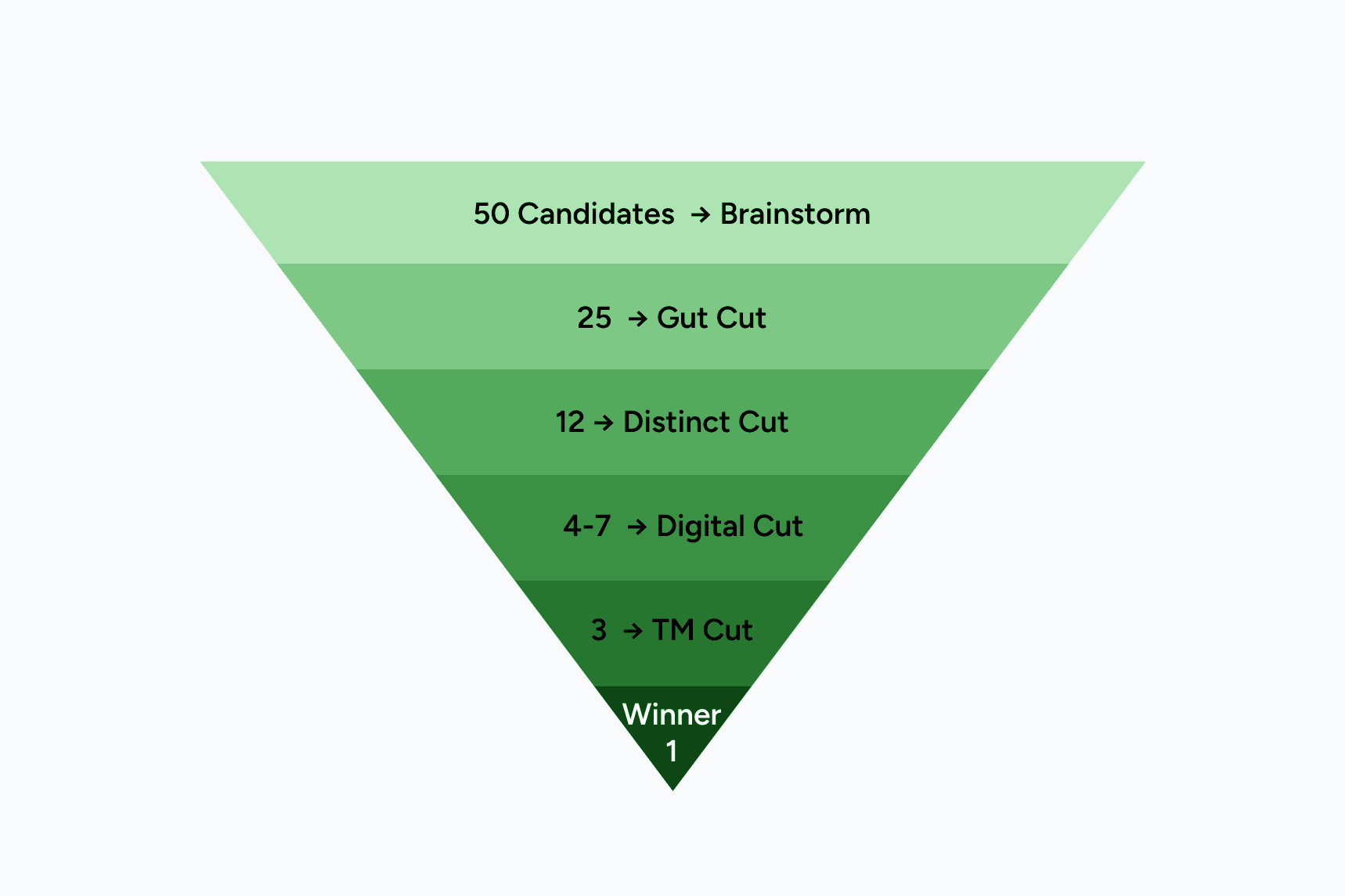
The naming process most founders use is to brainstorm 10 ideas, fall in love with one, and register the domain. It works occasionally. The version that works more reliably starts with 50 candidates and filters them through a few specific criteria.
If you've already picked a name and want to verify it's available, start with the trademark search guide. This guide is for the earlier step: picking a name worth checking in the first place.
The four criteria that matter
A good business name passes four tests. Most names you generate will fail at least one. The job is finding one that passes all four.
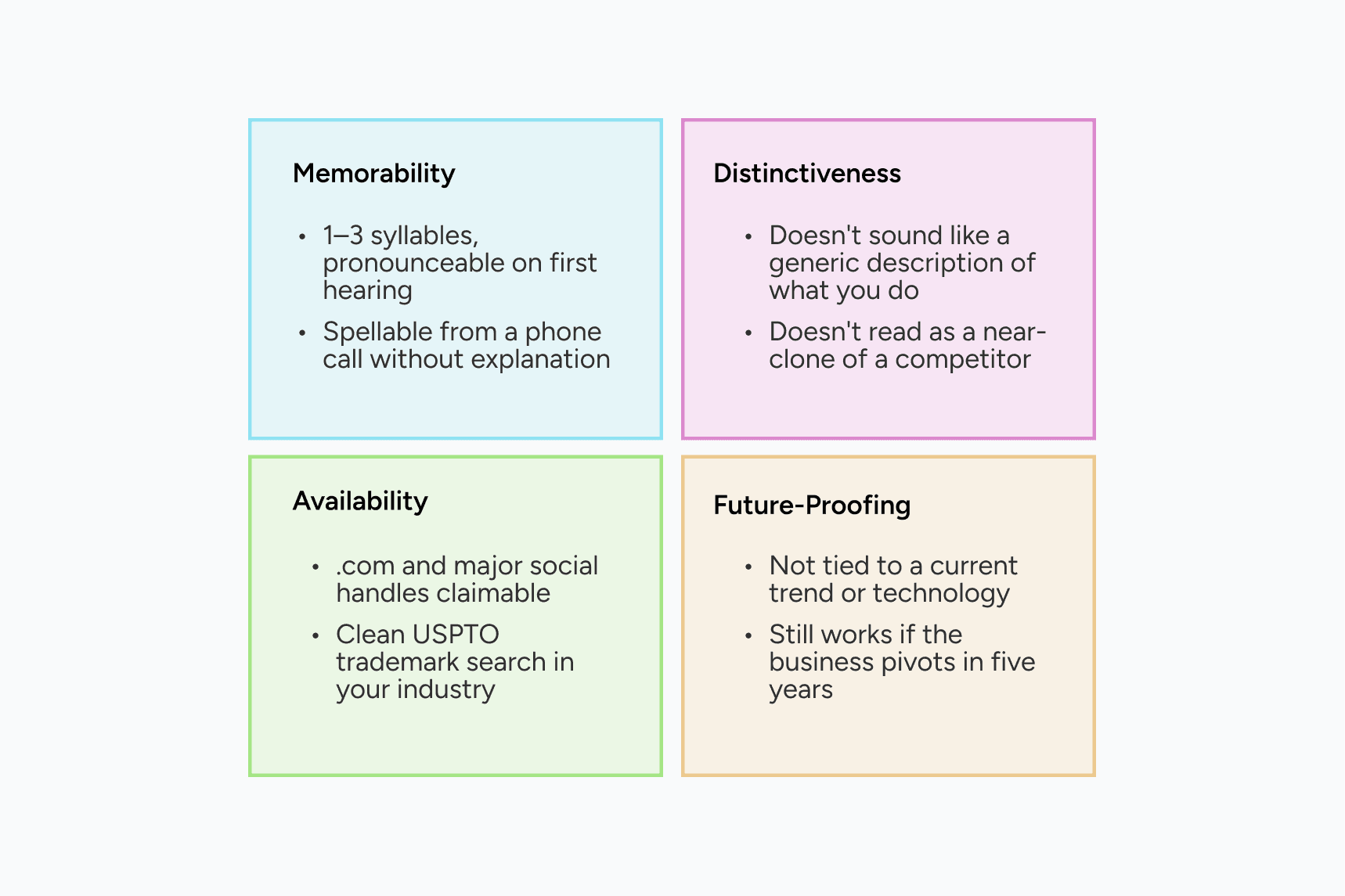
Memorability is the first test. A memorable name has 1-3 syllables, is pronounceable on first hearing, and is spellable after one or two repetitions. "Stripe" passes. "Inintegrate" doesn't. The phone test is the cleanest version: can someone hear the name on a phone call and write it down without you spelling it?
Distinctiveness is the second. A distinctive name doesn't sound like generic descriptions of what you do, and it doesn't sound like a near-clone of your competitors. "Best Software Solutions" fails. So does "Notlon" if Notion is in your category. The test is whether you could replace your competitor's name with yours in a sentence and have it feel like a knockoff.
Availability is third. A name is only useful if you can claim its digital and legal footprint. The .com, the major social handles, and a clean trademark search are the minimum bar. Names that pass all the other tests but fail this one are wasted effort.
Future-proofing is the fourth. A future-proof name doesn't tie you to a specific technology, trend, or moment. "Pets.com" worked for the early internet but limited the brand to one category. "Cloud" was modern in 2010 and will sound dated by 2030. The test is whether the name still works if your business pivots or operates in a different decade.
A name that wins on three out of four can still work, but you'll be paying for the missing one. A name that loses on two should be cut.
How to generate candidates
The biggest mistake in naming is filtering during generation. If you cut "weird" candidates as you brainstorm, you'll end up with the same generic names everyone else considers. The good names hide in the long list.
Aim for 50 candidates before you start filtering. That sounds like a lot. The first 20 will be obvious. The next 30 are where the actual gems live.
Use multiple generation methods to keep the list diverse.
| Method | Examples |
|---|---|
| Real words, unexpected use | Apple, Square |
| Coined / invented | Kodak, Spotify |
| Compound | Facebook, YouTube |
| Misspelled | Tumblr, Lyft |
| Founder or place | Ford, Patagonia |
| Verbs / actions | Stripe, Snap |
One approach is using real words unexpectedly. Apple is fruit. Square is a shape. The names work because they take a familiar word out of context and assign new meaning. This category produces the most distinctive names because it's hardest to confuse with competitors.
Coined or invented words come next. Kodak, Verizon, and Spotify are all made up from scratch. They have the advantage of being completely yours. The downside is they need more brand-building to feel meaningful, which founders with limited marketing budgets sometimes underweight.
Compound words combine two real words into something specific. Facebook is face plus book. YouTube is you plus tube. Snapchat is snap plus chat. These names explain themselves while still feeling distinctive, and they're often available where the component words individually aren't.
Misspellings of real words drop a letter or two from a familiar word. Tumblr (tumbler), Flickr (flicker), Lyft (lift). These tend to have better domain availability because the technically-misspelled version is less crowded. The risk is that names without standard spelling can be harder to remember.
Founder or place names work especially well for service businesses or when the founder's identity is part of the brand. Ford, Disney, Patagonia, Amazon. Less useful for products that need to feel impersonal.
Verbs and actions imply movement or process. Spotify, Lyft, Stripe. They tend to feel more energetic than noun-based names and work well when the product does something specific.
Generate 5 to 10 candidates from each method. Don't filter yet. Hold off on falling in love. Just generate.
How to filter from 50 to 1
Once you have your list, filter in stages. Most filtering can happen in your head or in a spreadsheet.
The first cut is gut. Read each candidate out loud. Cross off anything that's hard to pronounce, has obvious negative associations, or feels generic. This usually cuts the list in half.
The second cut filters for distinctiveness. For your remaining 25 candidates, write down your three biggest competitors. Compare each candidate against them. Anything that sounds like a near-variation should be cut. Anything that already exists in your industry (even if not a direct competitor) should be cut. This usually cuts the list in half again.
The third cut checks the digital footprint. For your remaining 12 or so candidates, run a quick check on .com availability and the major social handles. Don't go deep yet. You're looking for obvious failures. Names where the .com is owned by a major brand, or the social handles are taken by active accounts, can be cut. (NameClaim runs all three checks in one search if you want to do this fast.) This usually leaves 4 to 7 candidates.
The fourth cut is the trademark check. For your remaining shortlist, run a USPTO search on each. Anything with a clear conflict in your industry gets cut.
What's left is your real candidate pool, usually 1 to 3 names. Pick the one you and your co-founders agree is strongest. Register the .com and major handles immediately, then start building.
The naming checklist
| # | Criterion | Lyrn | NorthBeacon | Cloud AI Pro |
|---|---|---|---|---|
| 1 | 3 syllables or fewer | ✅ | ✅ | ❌ |
| 2 | Spellable after hearing once | ✅ | ✅ | ✅ |
| 3 | Pronounceable across English speakers | ✅ | ✅ | ✅ |
| 4 | Distinctive from competitors | ✅ | ✅ | ❌ |
| 5 | Not tied to current trends or tech | ✅ | ✅ | ❌ |
| 6 | .com available or under $5K | ✅ | ❌ | ❌ |
| 7 | Major social handles available | ✅ | ✅ | ❌ |
| 8 | Clean trademark in your industry | ✅ | ❌ | ❌ |
| Total | 8/8 | 6/8 | 2/8 | |
| Verdict | Ship it | Borderline | Cut it |
For each candidate that survives the four-cut filter, score it on this 8-point checklist. Anything that scores 7 or higher is shippable. Anything below 5 should be cut.
- Three syllables or fewer? (1 point if yes)
- Spellable after hearing once? (1 point if yes)
- Pronounceable across English speakers? (1 point if yes; names with non-obvious pronunciation lose points)
- Distinctive from competitors? (1 point if it doesn't sound like an existing brand in your category)
- Not tied to current trends or technology? (1 point if it would still make sense in 2035)
- .com available, or acquirable for under $5,000? (1 point if yes)
- Major social handles available or close to it? (1 point if Instagram, TikTok, and LinkedIn slugs are clean variants of the name)
- Clean trademark search in your industry? (1 point if no live or pending federal mark in your classes)
Score each candidate. The highest score that's also a name you'd be proud to put on a business card wins.
Common mistakes
A few patterns are worth avoiding because they appear in nearly every failed name decision.
The most common is falling in love before checking. A founder gets attached to a candidate, registers the .com, then discovers a trademark conflict or a missing social handle. By that point the emotional cost of switching is high, and they ship a name that's known to have problems. Run the availability check before you let yourself get attached.
Another is picking generic descriptive names. "Best Software" or "Tech Solutions" are technically names, but they're impossible to defend legally and impossible to make memorable. The trademark office will hesitate to register them. Customers won't remember them. Generic descriptiveness is a hard problem to outrun later.
A third is naming after current trends. Names with "AI" or "Cloud" or whatever the current keyword is feel timely now, but they age fast. A "Pets.com" name from 1999 still tells you what year it's from. Pick a name that doesn't pin you to a specific moment.
Co-founder veto problems also appear regularly. If you're building with co-founders, get all of them involved in the decision early. A name that one founder secretly hates becomes a slow-burning resentment that surfaces in interviews, marketing decisions, and arguments about brand direction for years.
A subtle one is over-optimizing for cleverness at the expense of clarity. Names with hidden meanings, multi-language puns, or insider jokes feel smart in the founder's head but require explanation in customer conversations. If you have to explain the name, it's working against you.
What to do next
Once you have your shortlist, the workflow is straightforward.
Run all the availability checks for each candidate. NameClaim handles trademark, domain, and social handle checks in one search, which makes the third and fourth filter cuts much faster. Pick the highest-scoring name everyone agrees on, register the .com immediately, claim the major social handles, and decide whether to file a federal trademark.
Picking a name is the kind of decision that feels overwhelming because it's identity-shaping. The framework is what makes it tractable. Generate 50 candidates, run the four cuts, score the survivors with the checklist, and pick the best one. The framework is what makes the decision tractable; the specific candidates you start with matter less than you think.